
News
Awesome! Share to:
Fiberglass (FRP) utility poles have become a superior alternative to traditional wood, steel, and concrete poles in modern power and telecommunication infrastructure. Engineered with high-performance fiberglass reinforced polymer materials, these composite poles deliver reliable, long-lasting performance for diverse outdoor and industrial projects, making them a top choice for global utility contractors and network operators.
Standard fiberglass utility poles feature flexible and customizable specifications to fit various project demands. They are available in heights ranging from 20 feet to over 100 feet, with customizable diameters and load-bearing grades compliant with ANSI industry standards. Most FRP poles adopt a seamless pultrusion structure, with pre-drilled bolt holes and integrated mounting brackets for easy installation. Designed with excellent bending and compression resistance, they support low-to-medium voltage power distribution, sub-transmission lines, and 5G telecom equipment loads. Fire-retardant, UV-resistant, and thermally stable coatings are optional to adapt to extreme temperature and weather conditions.
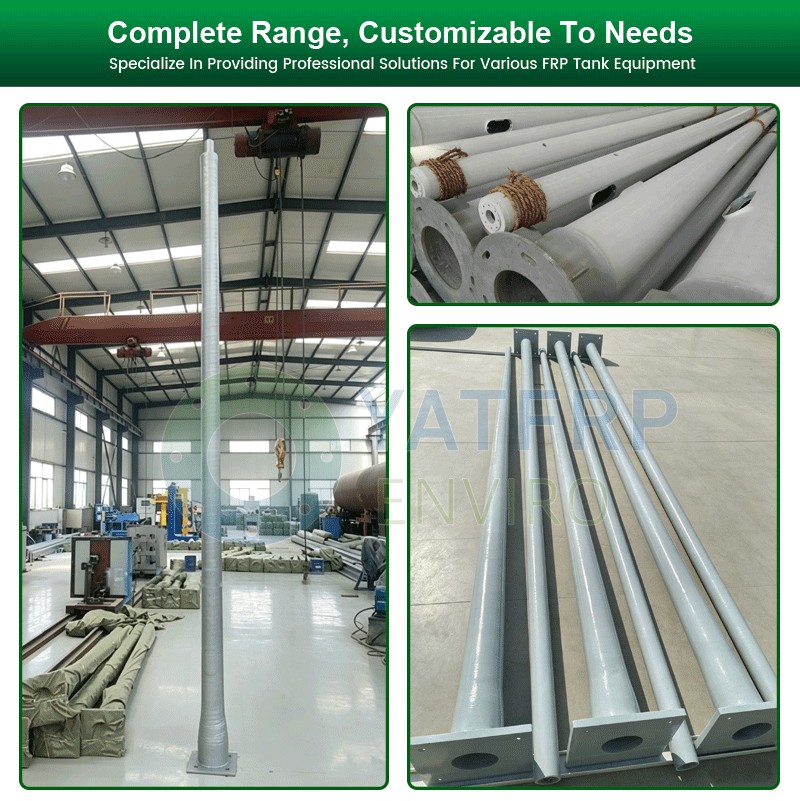
Fiberglass utility poles stand out with unparalleled functional and economic advantages. First, their lightweight yet high-strength structure reduces transportation and installation costs, enabling fast, safe construction in remote or hard-to-access areas. Unlike wooden poles, they are completely immune to rot, termite infestations, and woodpecker damage. Different from steel poles, they never rust or corrode, performing stably in coastal salt-fog, desert dryness, and acidic soil environments. Boasting a service life of over 80 years, FRP poles require almost no routine maintenance, greatly lowering long-term operational and replacement costs.
Another core benefit is their inherent non-conductive dielectric property. This insulating feature eliminates electric leakage and stray current risks, significantly improving on-site construction safety and grid operational stability. Additionally, fiberglass poles have strong wind and earthquake resistance, resisting warping and fracture under severe storms and harsh climatic impacts.
Due to these strengths, fiberglass utility poles are widely used across multiple industries. They are primarily applied in power distribution and sub-transmission systems for residential, commercial, and rural power grids. In the telecommunication sector, they serve as ideal supports for 4G/5G small cells, fiber optic cables, and wireless network equipment. They are also extensively used for urban street lighting, traffic signage, highway infrastructure, and outdoor monitoring systems. For harsh environments including coastal areas, wildfire-prone zones, and industrial corrosion zones, FRP poles have become the most reliable infrastructure solution.
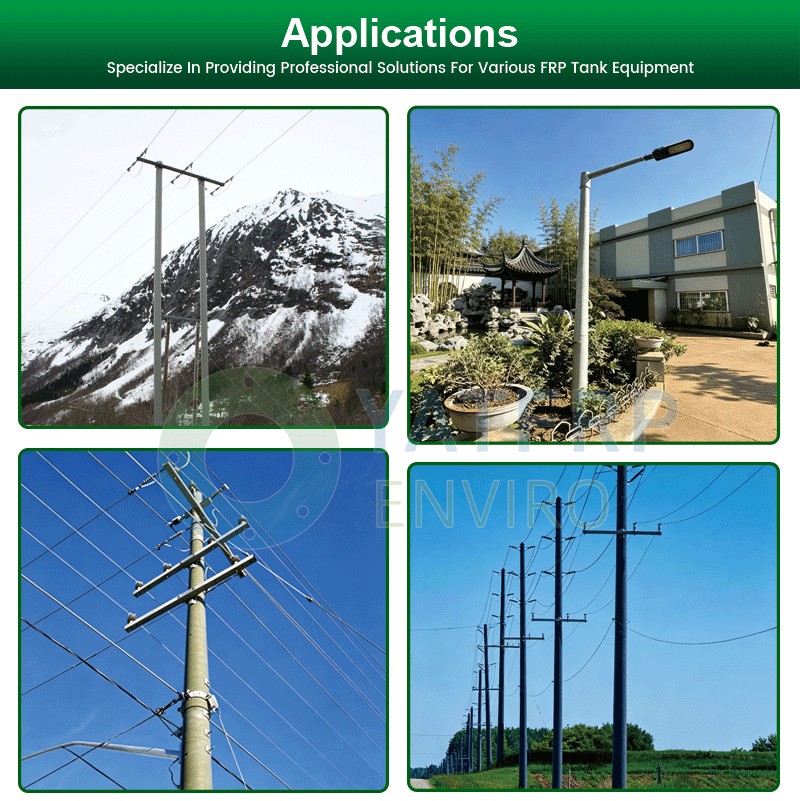
In conclusion, fiberglass utility poles combine standardized specifications, durable performance, and cost-efficiency. As sustainable, low-maintenance, and high-safety infrastructure products, they are gradually replacing traditional poles and leading the upgrade of global utility and telecommunication infrastructure.
If you are looking for high-quality, customized fiberglass utility poles for your power distribution, telecommunication, or outdoor infrastructure projects, we are here to help. We provide professional FRP pole solutions with full-size customization, competitive factory prices, strict quality compliance, and fast global delivery. Our professional team can offer one-stop technical support and tailored quotations according to your project parameters, environmental requirements, and installation needs. Feel free to contact us today to get a free, no-obligation quote and detailed product guidance for your upcoming projects!
Related Posts
- Pultruded Fiberglass Square Tube: Durable, Lightweight & Corrosion-Resistant FRP Tubing
- Fiberglass Utility Poles: Specifications, Key Advantages and Common Applications
- GRP Pipe: Premium Specifications and Versatile Industrial Applications
- Wet Scrubber: High-Efficiency Industrial Air Pollution Control Solution
- FRP Process Pipe: Premium Corrosion-Resistant Piping for Industrial Applications

Hebei YATFRP Environmental Protection Equipment Co., Ltd.
Hengshui City, Hebei Province
Get in Touch
*We respect your confidentiality and all information are protected.