
News
Awesome! Share to:
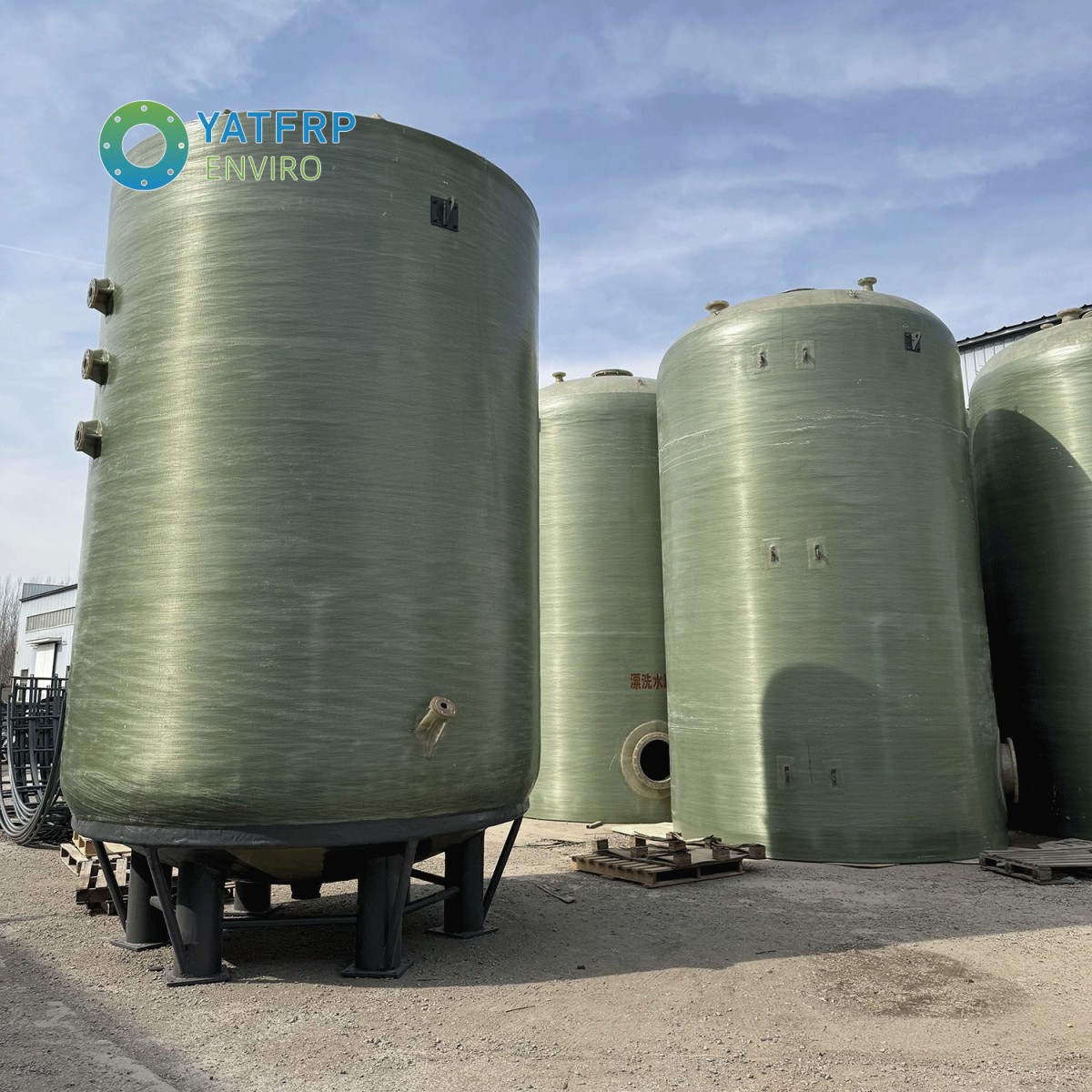
In the industrial sector, safely storing chemicals—especially corrosive substances like acids, alkalis, and organic solvents—poses a critical challenge. Traditional metal storage tanks, such as carbon steel or stainless steel, often fail to meet long-term needs due to their inherent vulnerabilities: rust, frequent corrosion, high maintenance costs, and short service life. This is where FRP chemical storage tanks (fiberglass reinforced plastic tanks) stand out as the ultimate corrosion-resistant solution, trusted by industries worldwide for their reliability, durability, and cost-effectiveness.
The primary advantage of FRP chemical storage tanks is their unmatched resistance to chemical corrosion. Unlike metal tanks that react with harsh chemicals, FRP tanks are made from high-quality resins and fiberglass reinforcements, which form a non-reactive barrier. They can safely store a wide range of corrosive media, including sulfuric acid, hydrochloric acid, sodium hydroxide, sodium hypochlorite, and various organic solvents, without any metal ion leaching or tank degradation. This makes them ideal for chemical manufacturing, water treatment, and other industries handling aggressive substances.
Another key benefit of FRP chemical storage tanks is their lightweight yet high-strength construction. Weighing only one-fourth of steel tanks while maintaining comparable strength, FRP tanks significantly reduce transportation and installation costs. Their seamless one-piece molding process eliminates welding seams—the weak points where corrosion and leakage often occur—ensuring maximum safety and preventing environmental contamination from chemical spills.
When compared to carbon steel and stainless steel tanks, FRP chemical storage tanks offer a much lower total cost of ownership (TCO). Metal tanks require frequent anti-corrosion coating, regular inspections, and early replacement, adding up to high long-term costs. In contrast, FRP tanks need minimal maintenance: occasional cleaning and visual inspections are sufficient to keep them in optimal condition for 20-30 years, reducing operational downtime and maintenance expenses.
FRP chemical storage tanks also boast design flexibility, allowing customization to fit specific project needs. They can be manufactured in vertical or horizontal configurations, with various capacities and tank shapes (such as cone-bottom or flat-bottom) to adapt to different installation spaces and usage scenarios. They also comply with international safety standards, including BS 4994 and ASME RTP-1, ensuring compliance with industry regulations and operational safety.
For industries seeking a reliable, cost-effective, and corrosion-resistant chemical storage solution, FRP chemical storage tanks are the clear choice. Their unique combination of durability, low maintenance, and design flexibility addresses the key pain points of traditional metal tanks, making them a long-term investment that enhances operational efficiency and safety
Related Posts
- Pultruded Fiberglass Square Tube: Durable, Lightweight & Corrosion-Resistant FRP Tubing
- Fiberglass Utility Poles: Specifications, Key Advantages and Common Applications
- GRP Pipe: Premium Specifications and Versatile Industrial Applications
- Wet Scrubber: High-Efficiency Industrial Air Pollution Control Solution
- FRP Process Pipe: Premium Corrosion-Resistant Piping for Industrial Applications

Hebei YATFRP Environmental Protection Equipment Co., Ltd.
Hengshui City, Hebei Province
Get in Touch
*We respect your confidentiality and all information are protected.